Home | Identity Theft Prevention | Page 38
Latest "Identity Theft Prevention" Posts
If it seems too good to be true, it probably is. 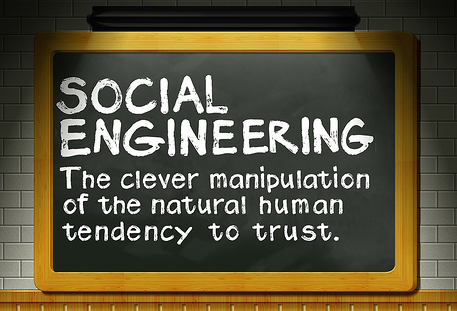
That is the best way to Think Like A Spy and be alert of Social Engineers that are trying to manipulate you. With such a gloomy economy and many people without work, offers for fast cash and huge discounts become more and more attractive. Most of these Identity Theft cases use the technique of Social Engineering.
Social Engineering is the act of manipulating people into performing actions or divulging confidential information by playing on their human emotions. The term typically applies to deception for the purpose of information gathering, fraud, or computer system access; in most cases the attacker never comes face-to-face with the victim. These days most thieves can nab your identity over the phone, mail, email, and through social networking sites such as Facebook and Twitter.
Posted in Fraud Detection & Prevention, Identity Theft Prevention, Online Privacy by Identity Theft Speaker John Sileo.
Tags: Facebook, Human Emotions, identity theft expert, Identity Theft Prevention, John Sileo, Online/Social Media Privacy, social engineering, Think Like A Spy, twitter
The Privacy Reflex
When I am training corporate executives, managers and employees to detect fraud and social engineering (manipulative information-gathering techniques), I take them through what it feels like to be conned. In other words, I actually socially engineer them several times throughout the presentation so that they begin to reflexively sense when more fraud is coming. There is no substitute for experiencing this first hand.
The Trigger—Requests for Identity
Spies are trained to instantly react when anyone asks for information of any kind, whether it is theirs or someone else’s. The trigger, or what causes you to be on high alert, is actually very simple—it is the appearance of your identity in any form (wallet, credit card, tax form, passport, driver’s license, etc.). Anytime someone requests or has access to any of the names, numbers or attributes that make up your identity, or to the paper, plastic, digital or human data where your identity lives, the trigger should trip and sound an alarm in your head.
Posted in Identity Theft Prevention by Identity Theft Speaker John Sileo.
Tags: Data Breach, Hogwash, identity theft expert, Identity Theft Prevention, Identity Theft Speaker, John Sileo, Privacy, social engineering
 The Department of Defense recently published an article about a speech I gave at the Joint Family Readiness Conference hosted by the Office of Military Community and Family Policy.
Military family members gathered here to learn how to prevent identity theft and I taught them to “think like a spy” in every aspect of protecting their personal information.
To think like a spy requires some specific mindsets and an instant reflex to those who are requesting their personal information. These reflexes are called triggers. I refer to the five triggers as the “Hogwash 5” because when a solicitor says them, your response should be “hogwash.” They are: “trust me,” a claim of protecting finances, asking for a “little bit” more information and things I call “bribe bias and fear bias.”
Posted in Identity Theft Prevention by Identity Theft Speaker John Sileo.
 During a time when rules, laws and privacy settings are having trouble keeping up with technology, Facebook is having trouble keeping up with their ever growing population. Recently topping 350 million users, Facebook is scrambling to satisfy them all. Recently, Mark Zuckerberg, the CEO of Facebook, posted an open letter on the website discussing changes to the Facebook privacy setting that they are implementing to help make their users data less public. Take a minute to read the full article and protect your profile.
Order your copy of the Facebook Safety Survival Guide to make sure you and your children are protected online.
John Sileo became America’s leading Identity Theft Speaker & Expert after he lost his business and more than $300,000 to identity theft and data breach. His clients include the Department of Defense, Pfizer and the FDIC. To learn more about having him speak at your next meeting or conference, contact him by email or on 800.258.8076.
Posted in Identity Theft Prevention, Online Privacy by Identity Theft Speaker John Sileo.
Tags: Facebook, identity theft expert, Identity Theft Prevention, John Sileo, Mark Zuckerberg, Online/Social Media Privacy, Privacy Settings, social networking
 The reality is that unsecured, curbside mailboxes are prime targets for people who are intent on committing the crime of identity theft. Although I would suggest to stop using the mail to send and receive identity documents, this is not always possible. Therefore, here are alternative suggestions:
Posted in Fraud Detection & Prevention, Identity Theft Prevention by Identity Theft Speaker John Sileo.
Tags: Fraud, Identity Theft Expret, Identity Theft Prevention, Identity Theft Protection, Identity Theft Speaker, John Sileo, mail fraud
 Google introduced the Google Dashboard on November 5th to help calm privacy critics. This provides a summary of the application data associated with your Google account.
Users are able to see what sites they visit, how many Docs they have created and share, how many iGoogle gadgets they are using, Google Reader info, Profile info, Tasks and YouTube history. This is great way for users to be able to see and control their data. It makes people more aware of what they put out there and allows them to set certain privacy settings. The Google Dashboard is currently available in 17 languages and you can Click Here to Read More.
John Sileo provides identity theft training to human resource departments and organizations around the country. His clients include the Department of Defense, Pfizer and the FDIC. To learn more about having him speak at your next meeting or conference, contact him by email or on 800.258.8076.
Posted in Identity Theft Prevention, Online Privacy by Identity Theft Speaker John Sileo.
Tags: Google, Google Dashboard, Identity Protection, identity theft expert, Internet, John Sileo, Privacy
According to a new Gallup poll of identity theft statistics, 66% of adults worry the most about their identities being stolen.
Gallup trends measuring Americans’ fear of being victims of specific crimes date back several decades, but for each of 10 crimes, the question has been updated annually on Gallup’s Crime survey since 2000. Terrorism was added to the list in 2001, and 2009 marks the first year identity theft has been included. Gallup says the reason for big worries about identity theft might have to do with the high-profile attention lawmakers and identity-protection firms have been placing on it.

Posted in Identity Theft Prevention by Identity Theft Speaker John Sileo.
Tags: Biometrics, Gallup, Identity Theft Statistics, John Sileo

Identity Theft Expert John Sileo’s Latest Fraud Report
Just as you wouldn’t want to give any personal identity information to someone via email, you want to use the same practices via text message. There is a new wave of fraud that tries to trick you with text messages appearing to be from your bank.
According to Wikipedia, SMiShing uses cell phone text messages to deliver the “bait” which entices you to divulge your personal information. The “hook” (the method used to actually “capture” your information) in the text message may be a web site URL, like it is in phishing schemes. However, it has become more common to received a texted phone number that connects to an automated voice response system. One version of this SMiShing message will look like this:
Notice – this is an automated message from (a local credit union), your ATM card has been suspended. To reactivate call urgent at 866-###-####.
Posted in Identity Theft Prevention by Identity Theft Speaker John Sileo.
Tags: Bank Fraud, cell phone safety, credit card fraud, Fraud Report, identity theft expert, Identity Theft Prevention, John Sileo, Scams, Smishing
While the majority of identity theft schemes prey upon individuals, small-businesses and organizations are increasingly becoming targets. Business identity theft is a serious threat, but it mostly flies under the radar simply because companies are embarrassed to discuss.
Although most companies are protected by copyright, patent and trademark laws, smaller companies lack the higher IT security measures that large companies have. According to recent studies by Javelin Strategy & Research this makes them 25% more likely to be victims of business identity theft over larger businesses. Not only do small businesses and business owners typically have larger lines of credit open than an individual, but they are unlikely to detect the fraud for six to eight months making them a prime target.
Posted in Fraud Detection & Prevention, Identity Theft Prevention by Identity Theft Speaker John Sileo.
Tags: Business Identity Theft, BusinessWeek, identity theft expert, John Sileo, small business, Workplace ID Theft