Home | Identity Theft Prevention | Page 31
Latest "Identity Theft Prevention" Posts
Businesses often make social engineering (or fraud) training boring! And that’s bad for your bottom line, because no one ends up remembering how to protect your organization against threats like data theft, corporate espionage or social networking exposure.
Too often, fraud and social engineering workshops cover just the concepts that define fraud rather than the feelings that signal it’s actually in process at the moment. The key to training your executives, employees and even customers on fraud is to let them experience what it feels like to be conned. In other words, they need to actually be socially engineered (manipulated into giving away their own private information) several times throughout the training so that they begin to reflexively sense fraud as it is happening. Like learning to throw a ball, there is no substitute for doing it for yourself. Fraud detection is similar; it takes actually doing it (or having it done to you) to fully understand the warning signs. Anything less will leave your audience yawning and uneducated.
Posted in Fraud Detection & Prevention, Identity Theft Prevention by Identity Theft Speaker John Sileo.
Tags: Business Speaker, Detection Fraud, Engineering Social, Financial Speaker, Fraud Detection, Fraud Training, Fraud Training Expert, social engineering, Social Engineering Speaker, Training Fraud
Your private data is bought and sold by junk-mailers without your knowledge, but you can easily opt out by calling 1-888-567-8688 or visiting www.OptOutPreScreen.com.
Find out how to opt out of junk mail today.
There are complete industries built around collecting, massaging and selling your data – your name, phone number, address, spending patterns, net worth, the age of your children, the magazines you buy, etc. Companies buy bits of your privacy so that they can knowledgeably market products to you that you are likely to purchase.
To minimize the amount of your personal information bought and sold on the data market, begin “opting out”. Opting out is the process of notifying organizations that collect your personal information to stop sharing it with other organizations. “Pre-approved” credit card offers (i.e., financial junk mail) are a major source of identity theft. Those mailers give thieves an easy way to set up credit card accounts in your name without your consent. They spend money on the card and default on the balance, leaving you with the mess of proving that you didn’t make the purchases. The solution is to opt out of receiving pre-approved credit, home loan and insurance offers.
Posted in Identity Theft Prevention by Identity Theft Speaker John Sileo.
Tags: How to opt of of junk mail, Identity Theft Speaker, junk mail, Stop Junk Mail
Senior Citizens are more vulnerable to Identity Theft because they are more trusting and less aware of the increasing variety of scams. Although most of our older relatives have no interests in the complexities of smart phones, computers, the Internet, and online banking; many that give it a try leave themselves defenseless against thieves.
The Elderly can be easily targeted online or through the mail in old fashioned schemes to steal their identity and ultimately their money. They are more likely to tell a stranger stories of their past that include simple password reminders (birth date, city, childhood pet, etc). They are less likely to suspect that an interested individual is a con-artist and not just a new friend. They can also be conned through the phone or in person by thieves impersonating a representative from a charity or a well-known company.
Posted in Identity Theft Prevention by Identity Theft Speaker John Sileo.
Tags: Elderly, Identity Fraud, identity theft expert, Identity Theft Fraud, Identity Theft Prevention, Identity Theft Protection, John Sileo, senior citizens
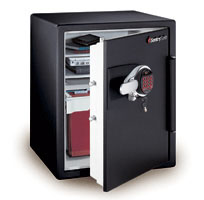
SentrySafe Fire Safes
A majority of our most valuable identity documents (passports, birth and death certificates, wills, trusts, deeds, brokerage information, passwords, health records, etc.) are exposed to identity theft (and natural disasters, such as fire and floods) as they sit in unlocked filing cabinets, banking boxes in the basement, office drawers or out in the open, on our desks. I spend an entire chapter in Privacy Means Profit talking about which documents to lock up, which to destroy and which to stop at the source. To complicate matters, the problem of data theft goes beyond paper documents to digital media. More than ever we need to be concerned with the physical protection of hard drives, cell phones, thumb drives, CDs and DVDs with sensitive personal or business data on them.
Posted in Identity Theft Prevention, Product Reviews by Identity Theft Speaker John Sileo.
Tags: Data Breach, Document Protection, Document Shredding, Document Storage, Fire Safe, Fire Safes, identity theft expert, Identity Theft Prevention, John Sileo
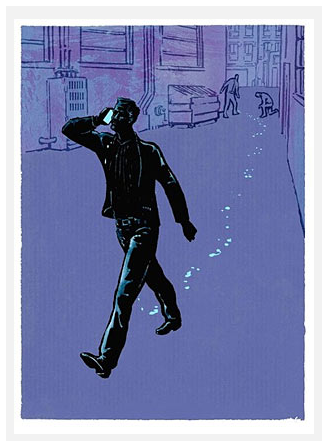
Hack into a smart phone? It’s easy, security experts find.
In a new LA Times article security researchers Nick DePetrillo and Don Bailey have discovered a seven-digit numerical code that can unlock all kinds of secrets about you.
It’s your phone number.
Using relatively simple and some old-school techniques almost anyone can hack into your smart phone. With the new wave of cellphone applications and a lack in cell phone security, you are leaving your mobile device vulnerable to identity spies and thieves. Anyone, trustworthy or not, can create an iPhone application and with over 250,000 apps people are doing just that. How do you know that the application you are downloading and allowing to access your cellphone is legitimate? In most cases – you don’t.
Posted in Identity Theft Prevention by Identity Theft Speaker John Sileo.
Tags: cell phone, cell phone security, cellular phones, identity theft expert, Identity Theft Prevention, Identity Theft Speaker, John Sileo, LA times
A new article in PC world discusses why the privacy settings on Facebook don’t matter – it instead blames the user for their own data breach. It recommends that those on Facebook should use their common sense and think in the long term. By controlling what you share and only sharing what is responsible Facebook is no longer in charge of your privacy.
 Why Facebook Privacy Settings Don’t Matter
John C. Dvorak – I find it endlessly amusing how so many articles are written about Facebook and its cavalier lack of concern over privacy issues (case in point: Read Dan Costa’s column). A large community is up in arms over the fact that Facebook consistently changes the way it operates and constantly resets the privacy settings of the users to nil, as in NO PRIVACY.
Posted in Identity Theft Prevention, Online Privacy by Identity Theft Speaker John Sileo.
Tags: facbook, Facebook, facebook privacy, Facebook Safety, Identity Theft Speaker, John Sileo, Privacy Settings, Social Networking Expert
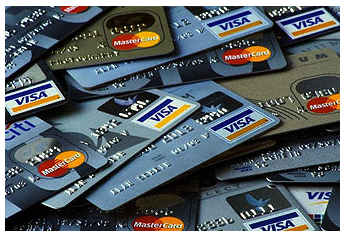
The FTC just busted a long-running internet scam where offshore thieves set up virtual companies and stole millions of dollars from US consumers one small charge at a time.
“It was a very patient scam,” said Steve Wernikoff, a staff attorney with the FTC who is prosecuting the case. According to him, the scammers found loopholes in the credit card processing system that allowed them to set up fake U.S. companies that then ran more than a million phony credit card transactions through legitimate credit card processing companies.
The fraudsters were able to fly under the radar for so long because they only charged consumers between $ .25 and $9 and set up over 100 fake companies to pull off these transactions. In this specific case they charged over 1.35 million credit cards a total of $9.5 million dollars – those nickles and dimes really add up! Shockingly, 94% of these charges went undetected by the credit card holder because they didn’t notice an unusual charge on their credit card statements and fraud detection agencies rarely detect anything under $10.
Posted in Identity Theft Prevention by Identity Theft Speaker John Sileo.
Tags: credit card fraud, credit card scam, Fraud, FTC, Identity Theft Prevention, Identity Theft Speaker, John Sileo, scammers, Theft, thief, Victim
The location of this page has been changed. Please bookmark http://sileo.eadev.site/category/product-reviews/ for future reference. This link will take you to a page of product reviews that help you prevent identity theft, data breach, hacking, phishing, password theft and other identity related crimes.
Posted in Identity Theft Prevention by Identity Theft Speaker John Sileo.
Tags: Document Shredding, Document Storage, Fire Safes, identity monitoring, identity theft expert, Identity Theft Monitoring, Identity Theft Product Reviews, Product Reviews, Safe Documents
As a parent you are often worried about what your kids are being exposed to on the Internet. Apparently so are Facebook and the PTA. They have teamed up to teach parents and children about responsible Internet use. They plan to cover cyber-bullying, internet safety and security and “citizenship online,” according to a news release.
“Nothing is more important to us than the well-being of the people, especially the many teenagers, who use Facebook,” said Sheryl Sandberg, Facebook’s chief operating officer.
Facebook is the number one social media site with over 500 million users and a minimum age requirement of 13. Even that requirement can be easily fudged because Facebook has no way of verifying a user’s age besides asking for their birth date when they register. Parents are having trouble deciding whether to let their children join Facebook prematurely and what they should be cautious of if they do so.
Posted in Identity Theft Prevention, Online Privacy by Identity Theft Speaker John Sileo.
Tags: "Identity Theft, child safety, children, facbook, Facebook, facebook privacy, Facebook Safety, Financial Speaker, identity theft expert, Information Privacy, John Sileo, kids, online privacy, Online Safety, parents, parents help, Privacy, social networking, Social Networking Speaker, Speaker, surfing, teens